The Oral Maxillofacial Practice (OMP) prepared this article for patients in Singapore who have seen recent news about Singapore’s new wisdom tooth surgery framework and want to understand what it means for their care.
The framework concerns professional training and accreditation. However, for patients, the main consideration remains the same: a recommendation for monitoring or treatment should follow an individual assessment of the tooth, surrounding anatomy, symptoms, medical history and treatment options.
What did the Singapore Dental Council announce?
On 29 July 2026, the Singapore Dental Council (SDC) announced the introduction of a Certificate of Competency, or COC, for wisdom tooth surgery.
The SDC described the wisdom tooth surgery framework as the first in a series of competency-based accreditation pathways for higher-risk dental procedures. According to the announcement, the initiative is intended to provide a structured framework through which dental practitioners can develop and demonstrate competency in wisdom tooth surgery.
The SDC also stated that practitioners intending to perform wisdom tooth surgery are strongly encouraged to acquire skills beyond undergraduate training. The public announcement uses the wording “strongly encouraged” rather than stating that the COC is mandatory. Media coverage has since reported differing professional views about implementation. This article focuses on the practical questions patients may have.
What is a Certificate of Competency?
In addition, the COC is a professional training and accreditation pathway. It does not recommend that clinicians remove every wisdom tooth, and it does not replace diagnosis, informed consent or an individual treatment plan. For instance, teeth can differ in position, depth, root shape and relationship to neighbouring structures.
Why can wisdom tooth surgery cases vary in complexity?
Some wisdom teeth erupt into a position where they remain healthy, functional and reasonably easy to clean. By contrast, others are partly or completely trapped under gum or bone. This is known as impaction.
Meanwhile, assessment may consider factors such as:
- Whether the tooth is fully or partly erupted
- The angle and depth of the tooth
- Recurrent pain, swelling or gum inflammation
- Decay affecting the wisdom tooth or neighbouring molar
- Food trapping and access for cleaning
- Root shape and development
- The relationship between a lower wisdom tooth and nearby sensory nerves
- Cysts or other changes around the tooth
- The patient’s medical history, medicines and anaesthesia needs
As a result, these factors explain why a clinician may advise one person to monitor a tooth while recommending removal or further investigation for another.
Does every impacted wisdom tooth need surgery?
No. An impacted wisdom tooth is not automatically an indication for removal.
A clinician may discuss monitoring when a tooth is not causing disease or significant problems and a clinician can review it appropriately. For example, a clinician may consider removal when clinical findings show concerns such as recurrent inflammation, infection, decay, damage to a neighbouring tooth or another condition requiring management.
Additionally, patients can learn more in OMP’s guide to impacted wisdom tooth assessment.
What happens during a wisdom tooth surgery assessment?
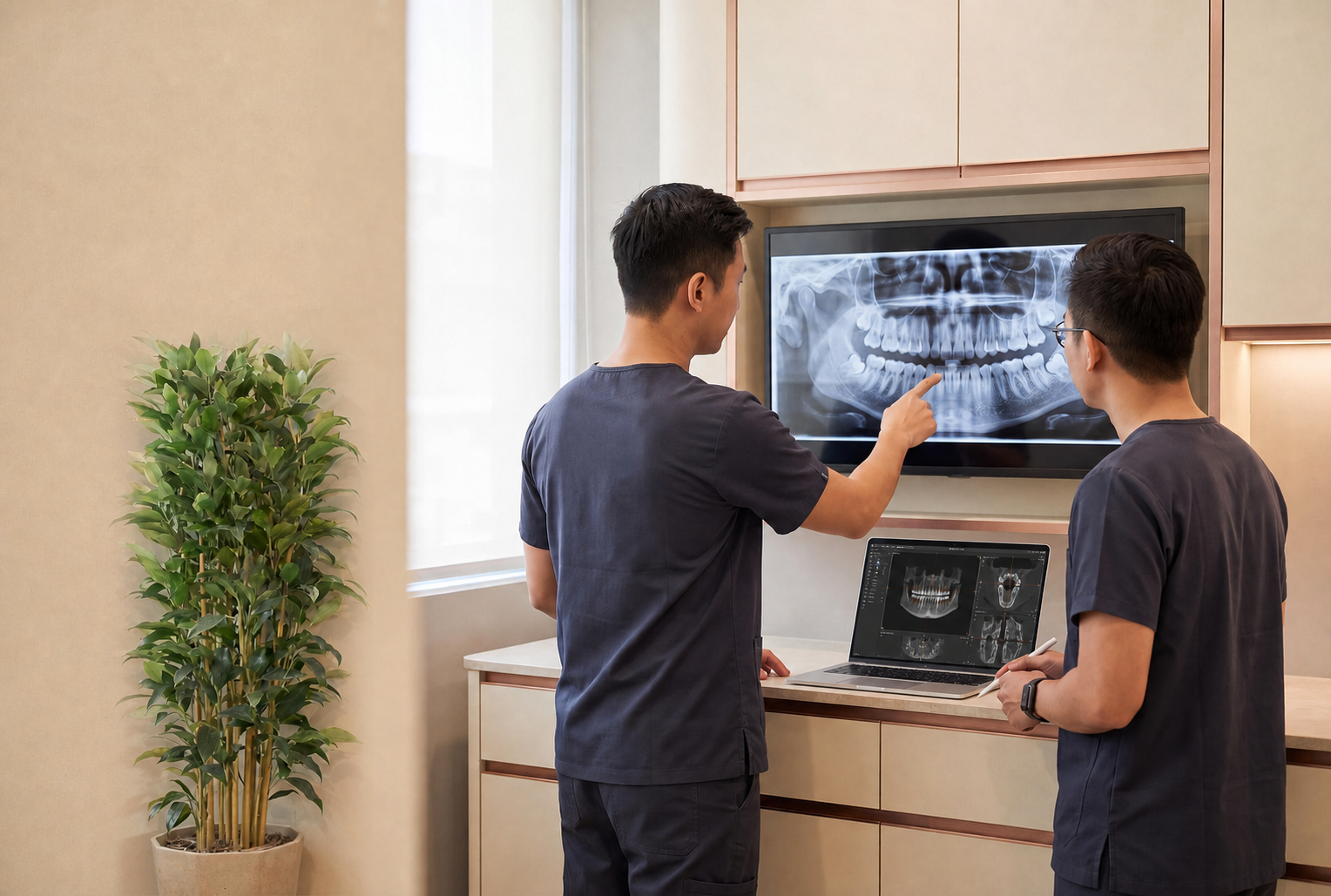
Assessment usually includes symptoms, previous episodes, medical history and examination of the tooth, surrounding tissues and mouth opening. Dental X-rays commonly show the tooth’s position; the clinician may consider three-dimensional imaging when more detail is needed.
Next, after reviewing the findings, the clinician can explain whether observation, further management or removal may be appropriate. If the clinician considers a procedure, the discussion should cover the proposed approach, alternatives, material risks, anaesthesia planning, aftercare and follow-up.
Moreover, OMP’s first-consultation guide explains how patients can prepare for an oral and maxillofacial assessment.
Questions patients can ask before wisdom tooth surgery
Consequently, recent discussion of professional competency may prompt patients to ask who is involved in their treatment. It is reasonable to ask clear, practical questions without assuming that every case needs specialist care.
Useful questions include:
- What is the diagnosis?
- Why is removal being considered?
- Is monitoring a reasonable option?
- What does the X-ray or scan show?
- How complex does this case appear, and why?
- Who will perform the procedure?
- What are the relevant risks and alternatives?
- What type of anaesthesia are you considering?
- What preparation and recovery guidance applies to me?
- What follow-up will be needed?
- In what circumstances would referral or additional assessment be appropriate?
The roles of dentists and oral and maxillofacial surgeons
Patients may first discuss a wisdom tooth with a general dentist. Depending on the practitioner’s training, the clinical findings and the complexity of the case, the dentist may recommend monitoring, provide treatment or arrange a referral.
An oral and maxillofacial surgeon manages surgical conditions affecting the mouth, jaws and face. For example, a clinician may consider specialist assessment when anatomy, medical considerations or anaesthesia require additional planning. For this reason, referral does not mean that the patient will definitely need surgery.
What does the wisdom tooth surgery framework mean for patients?
The wisdom tooth surgery framework is primarily directed at professional competency development. It does not change the need for patient-centred clinical assessment.
In practice, several principles remain relevant for patients:
- Diagnosis comes before treatment. Patients should understand their symptoms and imaging findings before deciding on monitoring or removal.
- Complexity differs between cases. Two impacted wisdom teeth may require different approaches.
- Patients can ask who will provide treatment. The clinician should be able to explain the proposed care pathway and when referral may be appropriate.
- Consent should be informed. The clinician should discuss benefits, limitations, material risks and alternatives.
- Recovery advice is individual. Planning depends on the procedure, anaesthesia, health history and personal circumstances.
How The Oral Maxillofacial Practice supports patients
The Oral Maxillofacial Practice is a specialist practice in Singapore focusing on conditions affecting the mouth, teeth, jaws and facial structures.
During an assessment for wisdom tooth concerns, OMP can review symptoms, dental and medical history, clinical findings and suitable imaging. The clinician can then explain whether monitoring, further investigation or removal may be appropriate, based on the individual situation.
If the clinician considers surgery, patients can discuss the proposed procedure, anaesthesia options, relevant risks, preparation, recovery planning and follow-up.
Next steps
If you have wisdom tooth pain, swelling, repeated gum inflammation or questions raised by a dental X-ray, speak with your dentist or arrange an assessment with an oral and maxillofacial surgeon.
Finally, a consultation can help clarify the diagnosis, the complexity of the case and whether monitoring or treatment may be suitable. This article provides general information and does not replace individual clinical advice.
References
- Singapore Dental Council. “Introduction of Certificate of Competency (COC) for Wisdom Tooth Surgery.” Published 29 July 2026; updated 30 July 2026.
- The Straits Times. “S’pore general dentists split over new guidelines for wisdom tooth surgery.” Published 22 August 2026; updated 25 August 2026.
Leave a Reply