
Dental implants and dental bridges are established tooth replacement options. Learn how specialists assess suitability, benefits, and long-term considerations.
Introduction
When a tooth is lost, replacing it is not only about appearance. It also affects chewing efficiency, bite balance, and long-term oral health. Two commonly discussed options are **dental implants** and **dental bridges**.
From an oral and maxillofacial perspective, the choice between these options is rarely one-size-fits-all. Instead, it is guided by clinical findings, anatomy, and patient-specific considerations. This article offers an expert overview of how these options differ and how suitability is assessed.
How Dental Implants Work
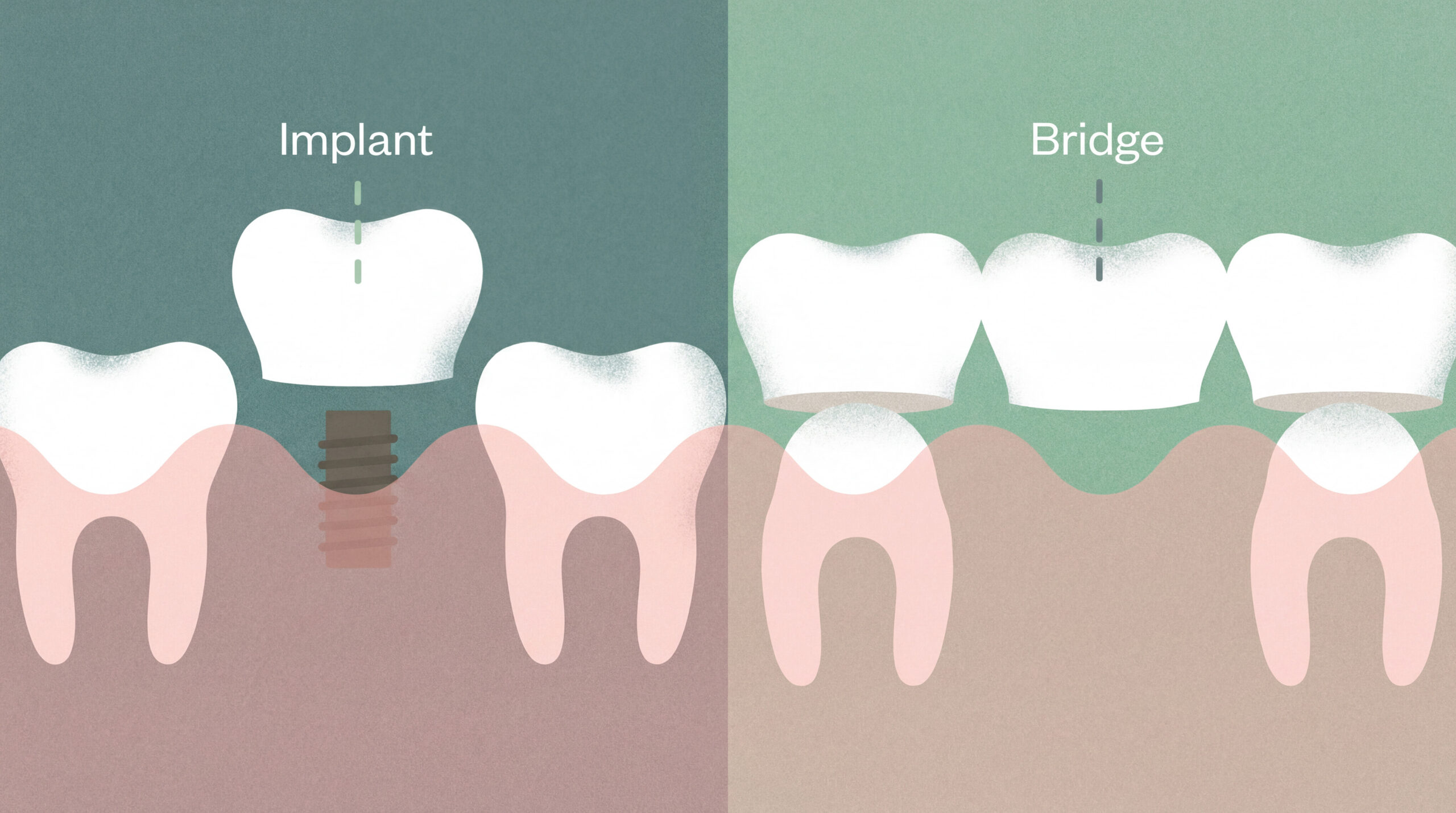
A dental implant is a small, medical-grade titanium fixture placed into the jawbone. Once healing occurs, the implant supports a crown, bridge, or denture without relying on neighbouring teeth.
According to HealthHub, dental implants may be considered when bone and gum conditions are suitable, following clinical assessment.
From a specialist standpoint, implants are often valued for their ability to function independently within the jaw.
How Dental Bridges Work
A dental bridge replaces a missing tooth by anchoring a prosthetic tooth to adjacent natural teeth. These supporting teeth are prepared to receive crowns, which hold the bridge in place.
Bridges do not involve placement into the jawbone and instead rely on the long-term health and stability of the neighbouring teeth.
Structural Considerations: Bone vs Teeth Support
One of the most significant differences between implants and bridges is **how they are supported**.
Dental Implants
– Supported by jawbone
– Do not require alteration of adjacent teeth
– Transmit chewing forces to bone
Dental Bridges
– Supported by neighbouring teeth
– Require preparation of otherwise healthy teeth
– Do not stimulate underlying bone
Academic centres such as the National University Centre for Oral Health, Singapore (NUCOHS) highlight the importance of evaluating bone levels and adjacent teeth before recommending a replacement option.
Bone Health and Long-Term Changes
After tooth loss, bone in that area may gradually reduce due to lack of stimulation. Dental implants may help maintain bone levels by transferring chewing forces into the jaw.
Bridges, while effective for restoring function, do not address bone changes beneath the missing tooth. Over time, this may influence gum contours or hygiene access.
Bone health considerations are particularly relevant in younger patients or when long-term oral stability is a priority.
Oral Hygiene and Maintenance Considerations
Both implants and bridges require long-term care, but the approach differs.
Dental implants
– Cleaned similarly to natural teeth
– Surrounding gum tissue requires monitoring
Dental bridges
– Require careful cleaning beneath the bridge
– Supporting teeth are at higher risk if hygiene is inadequate
The a clinical reference notes that ongoing maintenance is essential for both options, regardless of the method chosen.
https://www.mayoclinic.org/tests-procedures/dental-bridge/about/pac-20384699
Treatment Time and Planning
From a clinical perspective:
**Dental bridges** are often completed in a shorter timeframe
**Dental implants** usually involve staged treatment with healing periods
Time considerations may matter depending on individual circumstances, but speed alone is rarely the deciding factor.
Patients may wish to explore **[dental implant assessment explained]** or **[tooth replacement options explained]** for further context.
How Specialists Determine Suitability
An oral and maxillofacial assessment typically considers:
– Condition of adjacent teeth
– Bone volume and quality
– Gum health
– Bite forces and jaw function
– Medical history
Neither option is inherently superior; the goal is selecting the most appropriate option for the patient’s anatomy and long-term oral health.
Setting Realistic Expectations
Both dental implants and bridges are established treatment options with predictable outcomes when planned appropriately. However, outcomes vary based on biology, hygiene practices, and follow-up care.
Clear discussion of benefits, limitations, and alternatives supports informed, realistic decision-making.
Related OMP Resources
Patients may also find these articles helpful:
– **[Understanding dental implant assessment]**
– **[Bone grafting and sinus lift explained]**
– **[What to expect during an oral and maxillofacial consultation]**
Conclusion
From an expert perspective, the choice between dental implants and dental bridges is guided by anatomy, oral health, and long-term considerations rather than preference alone.
Through careful assessment and open discussion, oral and maxillofacial care helps patients understand their options and choose a solution that supports both function and oral health over time.
References & Further Reading
HealthHub Singapore – Dental Implants
National University Centre for Oral Health Singapore
Mayo Clinic – Dental Bridges
https://www.mayoclinic.org/tests-procedures/dental-bridge/about/pac-20384699